Sex, shame, and change in men: ten years of psychosexual clinical experience
What ten years of working with men has taught me about sex, shame, and change
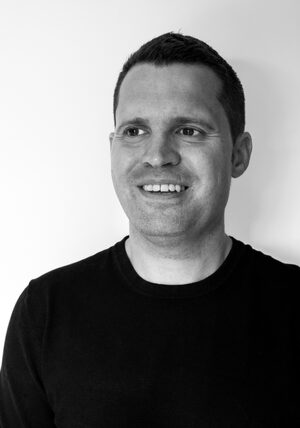
Being asked to talk about my clinical journey, what I do and why I do it, is by far the hardest thing I have been asked to think about in setting up this site. My mind goes blank. There is something about being put in the spotlight and asked to tell your own story that makes me freeze up, even after spending the last few weeks writing carefully about exactly these things.
It is uncomfortable. There is something about knowing that ideas change. What I think today, and what I believe works, is different from ten years ago. I am learning every day, and the more people we engage with, the more we understand about what actually helps. Saying what works with absolute authority, when the work itself keeps teaching you, is harder than it sounds.
But as I sit with that discomfort, something strikes me. This is almost exactly the experience that most of the men who come to work with me describe. The ability to sit down and be asked, openly, without a script, what you think is happening, what you believe, what you want to happen next. It is a hugely daunting experience. For most of the men I work with, there has been a long road before they ever reach me. Usually they have not been believed, or they have been dismissed, or they have been held back by unhelpful narratives about what was expected of them. Talking openly about our own experience feels overwhelming.
Maybe that is the point. That is where I land in this work. That is where all of my professional experience has sent me.
How I came to be here
I entered sexual health as a trainee clinical psychologist around twelve years ago. My original draw to the field was to work through the lens of clinical health psychology, to think about HIV. At the time we were nowhere near where we are now medically, with transmission rates and the medical adaptations that have transformed people’s lives. As a gay man, I felt drawn to this field. I grew up in the late 90s and early 2000s, when overt hostility towards sexuality minorities was far more visible, and I wanted to help people who might have faced difficulties around their sexuality similar to my own. Working in sexual health felt empowering. It represented an opportunity to make some change, and to work alongside a community I knew needed support.
I was immensely lucky to be working at Mortimer Market Centre in central London with a team of psychologists who were passionate about psychosexual health. One of them, my colleague Dr Karen Gurney, has been transformative in my career in every sense, a mentor and a friend. Her subsequent work founding the Havelock Clinic has continued to shape the field. The team at Mortimer Market were applying the ideas of clinical psychology to the things people were bringing about their sexual lives. Everything from the common psychosexual problems, erection difficulties, pain during sex, desire challenges, difficulty with orgasm, through to the broader identity work around coming to terms with sexuality, compulsive behaviours, patterns of risk-taking, the lived experience of HIV.
What became clear early on, as a very junior trainee, was that there was a real role for psychologists in this space. The role of decent psychological assessment that sat alongside multidisciplinary working. The role of psychological formulation to make sense of how we conceptualise our sexual lives, the drivers that impact sexual problems, and the interplay between psychological and physical health. These were skills I was learning in other places. They were skills applied in mental health settings, in other ways. I had just never seen them applied to someone’s sexuality or sexual life. Drawing on psychological models that went beyond traditional sex therapy was inspiring. The results were striking. The evidence base for how psychologists do this work was still relatively limited at the time. We were borrowing ideas, integrating models, going with what felt clinically right. But the work was meaningful, and people made real change.
What became clear from those early days was that speaking about sex, understanding our bodies and sexual function, was itself the challenge. Most of the people coming into psychosexual services were psychologically well in many ways. I had come from a more traditional mental health background, used to working with people experiencing profound impairment across most domains. In psychosexual work, almost the opposite occurred. Most of the people coming in were professional, highly attuned to their psychological wellbeing, literate in psychological ideas, motivated to create change. That, in a way, made the gaps in our knowledge and intervention more stark. Many people came in with a strong instinct for wanting change but very little language for how to do it.
Particularly the men.
I have had the privilege of working with a diverse range of clients throughout my career so far, across genders, sexualities, ethnicities and cultural backgrounds. It is what makes this work so rich and rewarding, and allows for the need to adapt and bring creativity to the work. Over years however, I have increasingly focused on working with men (of all backgrounds and identities). Perhaps this is something to do with my own gender, or who regularly seeks me out. Or the fact that in my NHS work I have found myself working in a service that supports sexuality minority men so passionately. I have noticed more and more that the need for psychosexual work in men is great, but the ways we often approach working with men in this space can leave them alienated or difficult to engage. Although I remain committed to working with all in this space, the needs of men and male sexuality is where I have increasingly found myself focused.
The thing underneath the thing they bring
Sitting in front of a man coming in to talk about sexual function, one thing became clear to me very early. There is not a model for how to approach this. There is not a clear route. But the stories stacked up, and they had striking commonalities.
Going to the GP. Asking for tests. Not having any answers. Googling online. Looking for resources that simply did not exist. Finding sex positivity material mainly aimed at women that spoke nothing to their individual lived experience. Feeling certain there was a physical problem, but being told there was not. Trying to come to terms with the idea that something might be psychological, finally acknowledging that, and then finding there were no services, nowhere to go, no one to speak to.
The road was difficult. It still is. It is incredibly hard for men to access decent psychosexual services. For many who already feel anxious and perhaps slightly resentful at having to engage with talking therapies at all, having to go through that arduous journey before they even arrive can feel overwhelming.
What became increasingly clear to me was that what often looks like a fairly targeted therapeutic intervention around something someone is bringing about their sexual life is almost always about so much more.
The symptom someone brings is very rarely the thing we actually need to work on. The problem with their body, the specific behaviour they are worried about, the specific ways in which sex is happening in their relationships. Yes, it is an issue, and it is often what brings people into the room. But it is very rarely the thing happening underneath. It is very rarely the thing maintaining the problem, driving it, giving it such a significant impact across so many areas.
For me, understanding the difficulties people have in their sexual lives has become much more a process of understanding what their relationship is to their bodies and to sex more generally. That is a complex question. Most of the men who come in will say, at first, that everything is fine. The relationship is great. I know what sex is. I know what my body is supposed to do. I know what I need. But so often, that is exactly the problem. The ways in which we are socialised to sex, the things we are told, the expectations we hold for ourselves, the pressures that come with how we experience ourselves sexually, are almost never interrogated. A lot of it is handed to us. We experience it through vicarious means. The world we grow up in. The cultural and social context we live within. Our family relationships and peers. The messages we receive from these sources inform, almost entirely, what we think and expect about sex, what our bodies should do, and the roles we are supposed to play.
When we choose a career, or where to live, or how to raise our families, we pause and think. We appreciate that there are many things informing our view, but we also interrogate what we actually want. For so many of the men who come to me to think about sex and sexuality, that form of thinking just does not exist. There is never a moment where they are invited to ask: what do I want? What actually meets my needs? Where do I want to conform to what I have been given, and where do I want to push against it?
This is the problem. Because often, when someone presents with a sexual function difficulty, what is actually underneath is that their relationship to sex has come to feel dangerous, threatening, or overwhelming. Those threats are rarely literal. They are complex and deeply held psychological threats. There is something you are supposed to do sexually, and if you cannot, you will be socially, relationally, romantically ostracised or rejected. It is not that men do not genuinely want the sexual lives they are describing. Of course they do. But the reason something like losing an erection is so devastating is not just that an erection feels good. It is the relationship we have built with the idea of what is normal, and what it means to deviate from it.
The fixation on the erection not being strong enough, the fixation on how long it takes to ejaculate, the fixation on whether a particular sexual act can be performed in a particular way, is the noise around a much deeper message.
Am I not normal? Can I not do something that is going to get me loved? What if I can never do this? Will I be rejected? Will I be alone? Will I never be able to have a relationship?
That is where the distress sits. The fixation on the body is the noise. The relational fear is the signal.
I want to say something that might sound counterintuitive. A lot of traditional psychosexual therapy, understood as a set of behavioural techniques to help people function better sexually, feels quite boring to me. Get a stronger erection. Reduce pain. Have an orgasm. It is important, and sometimes it is really empowering for someone to learn a strategy or a technique that helps them improve how their body responds. But the sustainable change comes from somewhere else. It comes from interrogating what we actually want, why we feel we cannot get it, and what makes us feel threat or pressure around sexual experience. Those are the things that start to impact the way our bodies work.
Often no one has ever framed it in those terms. There has not been permission to think about sex in a more fluid way. The question most men arrive with is: what is wrong? What is not working in my body? The question I actually want to ask is: what is your relationship to sex at the moment? What do you want it to be? How would that look different over time?
Finding CFT, and why nothing else quite fit
How I came back to CFT
I was first introduced to compassion focused therapy during my clinical training, about fifteen years ago now. We were lucky enough to have some incredible teachers come and speak about what was then a relatively new and emerging model. I remember reading Paul Gilbert’s 2009 paper introducing Compassion Focused Therapy (CFT) and being struck by how he had managed to distil something that is, at root, quite complex neurobiology, attachment theory, and psychological construct, into a model that felt genuinely relatable. If you feel connected to something as a therapist, you are much more likely to be able to use it with the people in front of you.
On my training I also had the privilege of Dr Deborah Lee teaching us about shame, and the work she had done to think about how compassionate responses to shame can make significant differences to what often look like intractable mental health presentations. Most of my CFT exposure at that point was in response to chronic depression, inpatient presentations including psychosis, and the emerging work around eating disorders. It made sense. It felt intuitive. Results seemed to be really positive. But it was not until I was qualified and working in practice that I returned to CFT specifically in the context of working in sexual health. It was then, while I was working in East London where we set up a service for psychosexual health, that I realised the core tenets of compassion focused therapy fit the presentations we were seeing in a way that nothing else had.
Before that, in the earlier part of my career, the model I had trained into at Mortimer Market was systemic sex therapy. I will not go into the detail, but what was important about it was that it gave us a way of looking at the levels at which you might intervene. The framework borrowed from work in the 1970s and 80s and distinguished between approach, method, and technique. The approach we held was that there were multiple perspectives on what sex could be, who does what, and what was okay. There was no prescribed way of being sexual. Context informed everything. Age, gender, sexuality, physical health, education, culture, religion, family of origin. The list goes on. Method gave us a set of clinical moves. Reflective groups, circular questioning, deconstruction of dominant ideas, bringing in the less heard narratives. Technique was what you actually did in the room. By holding the overall approach and method, you could be adaptive at the technique level. Sometimes you would do something cognitive. Sometimes behavioural. Sometimes reflective. Sometimes relational. Sometimes psychodynamic. It was possible to meet men where they were.
My views have evolved a great deal over the years. Early in my career I held strong convictions about how sex and sexuality should be understood, and an instinct to challenge the assumptions people brought into the room. What the work taught me, through the people I sat with, session after session, is that you cannot change anyone by starting from where you think they should be. You have to start from where they actually are. Sometimes the most useful thing a therapist can do is hold a position and introduce a frame someone has not heard before. But it has to come alongside them, in their language, on their terms.
The tricky brain in sex
The first concept in CFT that drew me back into this model in a sexual health context was the idea of the tricky brain. Paul Gilbert, Chris Irons, and many others have written about this. Humans, with our extraordinary prefrontal cortex, can do things no other known species can. We think, reason, reflect, hold multiple things in mind, make decisions, engage in abstract thinking. This is remarkable. The problem is that the same brain has an equal capacity to judge, criticise, over-analyse, create loops of repetitive thinking, fixate, and become preoccupied in ways that are deeply unhelpful. Our brains have a particular tendency to believe they can think their way out of every problem, often in ways that perpetuate internal shame.
What struck me early on was that the tricky brain plays a very specific role in sex and sexual response. Being sexual is, or should be, a moment of connection. Yet for so many of the men I work with, it can become an incredibly lonely experience. The brain switches on in exactly those moments and produces patterns of thinking and feeling that are hostile, critical, judgemental, shaming. This does not happen in a vacuum. Sex is still not spoken about consistently in our society. Not knowing whether we are doing the right thing, not knowing what the person in front of us wants and expects, these remain silences. In the vacuum, the tricky brain steps in. If at any point we feel we are not doing something the way we should, or we receive feedback that feels less than satisfactory, the internal critic activates. For men, this gets amplified. The tendency to feel that there are standards to achieve in sex and sexuality. Roles to take on. A performance to deliver. These standards are rarely explicitly articulated, but they are felt. The internal self-critical voice can even be misinterpreted as a motivator, trying to get us back on track. But for many of the men sitting in front of me, that just has not worked. And the tricky brain keeps us stuck.
Threat, drive, soothing
The second concept that drew me in was the description of emotional regulation systems and how they interact. We all live in a world where we have the capacity to feel threat at times, and a system in the brain that switches on to protect us. We have another system that helps us acquire things, to move towards goals, the drive system. And we have a third system, the soothing system, that enables us to regulate emotional states without needing anything external.
For sexuality minority men
For sexuality minority men, there is often a lived experience of threat in relation to being sexual. To literally existing as a sexual person. Those threats are both external and developmental. External threats include growing up gay, having to come out, experiences of discrimination, marginalisation, stigma. The degree to which someone has been affected varies. But the experience of just being sexual is layered on top of historical threat. There is a developmental dimension that matters. If you have lived a marginalised existence, or you have been told that your sexuality is wrong, or you have not had opportunities to express your sexuality, or you have been cut off from doing so, your ability to develop sexually has often been significantly stunted. To navigate sexual experiences we need experience. We need to learn that something is safe. If we have been denied those opportunities, it is very difficult to feel comfortable simply being sexual with another person. A man arriving in his late twenties or mid thirties may appear his chronological age, but his sexual developmental landscape may be very different. We have to be aware of our own privileges as clinicians. Not everybody has had the same trajectory.
Other threats are internal. Many of the sexuality minority men I work with are confident. They have had a lot of sex. Sex has brought joy. Except for the ideas about what is expected, what your body is supposed to look like, who is sexual, who does what to whom, what roles you are supposed to play. When threat enters around any of those, the relationship to sex wavers.
What I found very difficult to articulate early in my career, but CFT gave me language for, was the way the threat and drive systems become intertwined in sex. Sex can be avoided because of threat. Or sex can be used as a fix. As a way of avoiding, escaping, or distracting from other forms of threat. Either way, what emerges is a relationship to sex where you either start in a threatening experience and use sex to fix it, or you start with sex as something the drive system tells you to acquire and end up in situations where you do not get your needs met, do things that feel risky, are with partners you do not like. Sex becomes both threatening and a solution to threat. Traditional sex therapy models do not pay attention to this.
For heterosexual men
For heterosexual men, the dynamic often looks different but lands in a similar place. Many arrive describing the experience of never really having to think about sex, especially not sexual function, because their bodies just worked, until they did not, and the absence of any prior thinking is itself part of the problem. The idea of deviating from what had appeared to be a fixed and prescribed route triggers a deep sense of insecurity. It is rarely articulated in those terms, but it is often manifested through the body. Through the erection that does not hold. Through the ejaculation that arrives too quickly. Through the desire that has quietly diminished.
Some men avoid sex because of threat. Worrying their body is not doing what they want. This is not always internal. Partners have shamed them. Friends have. Material online tells heterosexual men how they should behave, how things should happen, what women expect, what relationships should look like. The interplay of internal and external threat is very similar to the experience of sexuality minority men. The origins differ. The initial emotions differ. But we often end up in the same place. Shame. Fear of rejection. Fear of the future. Low self-confidence. Anger. Resentment. These threat-based emotional drivers end up looking remarkably similar across populations. For men this is very rarely spoken about. Traditional approaches have not been curious enough about it.
Curiosity and the nature of threat
What is critical for both groups, but probably most obvious for heterosexual men, is that the manifestation of threat is not always purely psychological. Sometimes it is obvious. I feel worried. I feel less confident. I feel judged by my partner. That comes up. It is on the surface for many people. But often the physical change to the body is the manifestation of the threat. I just cannot get an erection in the way I want to anymore. No matter how hard I try, it does not stay. I keep ejaculating early. The minute we get anywhere near penetration, I come.
CFT was useful here in a way that traditional approaches were not, because it did not jump immediately to the problem. It asked first: how are your emotional regulation systems operating in this situation? What is happening in the moments just before? The physical symptom is often a sign that the threat system is active. If we experience threat, we activate the sympathetic nervous system. The release of adrenaline, cortisol, noradrenaline. At a purely biological level, we know these chemicals suppress sexual function. So if someone is not having an erection consistently, or is not ejaculating the way they want, or their desire profile has changed, a good question to ask is, where is the threat? Where is it coming from? How is it changing the relationship to sex?
Of course some men have erection problems for purely biological reasons. But it very rarely stops there. The experience of the body changing, for whatever reason, often drives threat. That compounds how the body behaves over time. For men in this space, having an anchor to the biology, to processes they understand are physical, that overlays with a psychological response, is a powerful intervention. It allows us as therapists not to silence what feels embodied. It allows us not to invalidate. It allows the man to feel seen. And it opens up a different discussion about what might be driving the behaviours.
Then there is the question of soothing. In CFT the third system, the soothing system, is the capacity to regulate emotional states from within. To recognise feelings, process them, move through them without needing to escape or fix. For many of the men I work with, this system is not just underdeveloped. It has been actively distrusted. For sexuality minority men, there can be a double experience. Caregivers who have not modelled how to manage emotional states in general, with this population at higher risk of attachment challenges. And a complete absence of any modelling of how to manage emotional states in relation to sex and sexuality specifically. Most people grow up with heterosexual parents. That is a fact, not a criticism. As a heterosexual parent, you may not be able to pick up on the nuanced experience of a young person coming into their sexuality in a different direction. It may not occur to you. It is not obvious. It is not something you have lived through. So you do not notice. The implicit message, over time, becomes: these feelings are either not real or not available to be discussed. And so the child learns to avoid, escape, or fix the feelings rather than to sit with them.
For heterosexual men, the deficit is somewhat different but the endpoint is similar. Sex is still often linked, implicitly, to social status and performance. The modelling of how to talk about, connect to, and explore emotional states in general remains devalued for many boys. Suppressing or avoiding emotional states is still often coded as stoicism, or as a sign of coping within traditional masculinity. This creates a difficult combination. Because when sexual encounters, experiences, or relationships become challenging, when uncomfortable feelings emerge, there is not really a foundation to fall back on. There is no one to speak to. And there has been nothing modelled. We expect adult men to employ skills in response to sexual experiences that they have actually never been equipped with. No one taught them. No one alerted them to the fact that they were going to feel these complex emotions, and no one told them what to do when they could not immediately make sense of them.
CFT helped me to understand this as the deficit itself, rather than a resistance to treatment or a lack of motivation. It is why rolling out behavioural techniques is never quite enough. You are sometimes trying to speak a language to someone who does not have that language yet.
Compassion is courage
The language around compassion and self-soothing, initially, can feel alienating to many men. It is not in line with the ways many have been taught to think about their own emotional states, let alone their sexuality. Doing this work for a long time, I have come to understand that compassion is not just being kind to one another, or being nicer to ourselves so we do not feel as bad about what we are experiencing day to day.
Compassion is the courage to sit with difficult experiences. It is the courage to acknowledge they exist. It is the courage to recognise we do not have answers. It is the courage to know we are not as skilled as we thought we were. It is the courage to admit that the viewpoints we hold, the things we were taught, the things we have experienced, might not represent everything.
In that sense, compassion and self-soothing is about nurturing wisdom. Wisdom comes from experiencing. We only learn what is right for us, what direction we want to take, what responses feel best, by experiencing them. By being open to the experiences of others. By being prepared to experience something different in ourselves. This is not platitudes. It is not saying nice things to each other, or doing techniques to regulate in the moment. It is setting a different course. Thinking completely differently about how we want to approach our sexual experiences.
For many of the men I work with around compulsive sexual behaviours, we ask a question early on. Where do you want to go? What do you want your sexual life to look like? We often get blank faces. Because that question is more complex than it sounds. To know where you want to go, you need reference points. You need to have experienced good and bad. You need to feel like there are choices. You need to feel that there are options to be sexual in a variety of ways, not just what was prescribed.
Deeper than that, we ask men about their values. What values do you have sexually? It sounds simple. But to understand the values you hold for yourself sexually, who you want to be, how you want to relate to partners, what kind of sexual relationships you want to nurture, you need the capacity to sit with the discomfort that you might not have lived to those values. You might have to be honest that you have not had permission to live by values that actually meet your needs.
Self-soothing in this space is about helping someone take a whole different position on their sexual life. It cannot be distilled to a few techniques. Soothing rhythm breathing, internal self-dialogue, meditation, mindful practice. These are vital. But I view them as gateways. They help us regulate the immediate state enough so we can then think. Usually then to sit with more discomfort. To sift through and find a way forward that meets our needs in a better form. That is what being kind to ourselves looks like.
What the evidence now says
The field catches up
The evidence base for compassion focused therapy has expanded substantially in the last five years. A high number of randomised controlled trials, systematic reviews, and good-quality controlled studies have applied CFT across a wide range of clinical populations. It is now a fairly established and credible model and intervention across mental health, including depression, anxiety, trauma, psychosis, severe and enduring mental health conditions, and eating disorders. It is also being applied to more marginalised groups, including sexuality minority populations and racialised communities. There is a lot of work to do, but the foundation is now there.
Where this matters most for the work I do is the application of CFT to sex and relationship therapy. That is still relatively new. Dr Jane Vosper and her team at Barts Health in London have published a clinical and theoretical paper setting out the positioning of compassion focused psychosexual therapy which has been foundational in establishing the validity of CFT in psychosexual work.
How the work started
When I took over the psychosexual lead at 56 Dean Street in 2020, I inherited a long waiting list, and a striking proportion of it, somewhere over thirty percent, were gay, bisexual, and other men who have sex with men struggling with compulsive sexual behaviour, with drugs and sex (including chemsex), or with both. We could have continued offering one-to-one therapy to every man on that list. But it started to feel that the conversations I was having in individual sessions were repeating themselves over and over again. The same loneliness. The same shame. The same sense that there must be other people in the same position, but no obvious way to talk to them.
The men were also asking for something different. Going back into community spaces, into the bars and chill-outs, into the parties, and being vulnerable enough to say if you were not okay, felt overwhelming. They wanted somewhere structured to talk to other men. The group came out of that demand.
Existing services were not meeting these men where they were. Mental health services often did not understand the psychosexual elements of compulsive sexual behaviour. Traditional sexual health services were not commissioned to deliver meaningful mental health work. Drug services were geared towards alcohol and other substances in ways that did not fit the patterns or relationships men were having around chems. And across all of these, many sexuality minority men felt that the nuances of gay culture, the way sex is positioned within it, the choices people might make about exploring their sexuality, were minimised, ignored, or rejected outright. There was a real gap.
The group was developed in 2021 with colleagues at 56 Dean Street, and have run cohorts ever since. Last year we published results based on seven of those cohorts, fifty-nine men in total, with around eight men per group. We measured two things. A range of quantitative outcomes, to see whether the group meaningfully changed the symptoms and the relationship to them. And qualitative feedback from participants, to understand what they actually experienced as meaningful.
What we found
The headline result was striking. Almost 86% of the men who completed the programme reported a clinically meaningful reduction in their compulsive sexual behaviour by the end. The measure we used captured both the behaviour and its impact. By the end of the group, men reported that the behaviour was happening less, and that they felt more in control of their relationship to it.
What made this finding more powerful was who we included. We deliberately let men into the programme regardless of which compulsive sexual behaviour they came in with. Pornography, app use, sex on premises, public sex, risky sex, sex with sex workers, and drugs and sex (including chemsex). There was no significant difference in outcomes across any of these presentations. Regardless of what someone came in with, the change was the same.
That cuts against a lot of conventional wisdom about therapeutic groups, particularly the idea that you cannot have men in the group who are using drugs, that substance use will rupture the therapeutic alliance, that meaningful therapeutic work is impossible while drugs are in or around someone’s life. It was false in this programme. It was false. Some men moved towards abstinence as part of the work. Others did not. Both groups changed.
We also found significant improvements in self-compassion. That was the strongest finding outside of the headline result. Men ended the programme with a measurable increase in their ability to be compassionate towards themselves, and reported that they had skills to deploy that self-compassion in their everyday lives. That matters because the model we were using rests on the idea that increasing self-compassion is what makes the underlying emotional drivers of compulsive sexual behaviour less powerful over time.
The mood findings were more modest. Men reported less anxiety and less depression at the end of the course. The improvements were real, but the changes were less statistically reliable than the changes in compulsive sexual behaviour and self-compassion. I think that makes sense, because the group was not designed to be a mood intervention. We did not target depression or anxiety directly. And the end of the programme is not always a place of resolution. It is often the start of a new phase, and some of the anxiety we picked up at the end probably reflected that. What comes next? Where do I go from here? Those are real questions to be sitting with at the end of any meaningful piece of work.
The psychosexual outcomes also moved in the right direction. Men reported more confidence in their bodies sexually. More comfort with the idea of sex. Improvements in their sexual lives overall.
What ties all of this together is that we did not take a position of striving for abstinence. We did not locate the problem inside the individual. We recognised that some of the drivers for what gets called compulsive sexual behaviour sit way outside the person, in social and cultural context. We helped men think about what they wanted their sexual lives to look like next, rather than telling them what they should be doing. And holding that different position did not seem to compromise their ability to make meaningful change. If anything, it made the change possible.
What the men said
The qualitative findings tell the same story from the inside out. Three themes emerged from the participant interviews, and all of them centred on what made the space work rather than on any single technique.
The space. An affirmative space, led by LGBT facilitators, in a service known for being affirming to LGBT people. Men did not have to explain themselves. Did not have to apologise for their identity. Did not have to conform. That alone was a powerful framing. It allowed men to feel safer from the outset, to make their own decisions, and to be more reflective in the room.
The model. The compassion focused approach itself, the threat-drive-soothing language, the techniques, gave men a way to understand the problem through a different lens. They could see their behaviours not as evidence of a defect but as understandable responses to threat that had over time stopped serving them. They had something concrete to work with.
Each other. Something about the group itself, the men reflecting back to each other what they were hearing in themselves, the modelling that happened between participants, mattered more than any technique. People made sense of their problems together. They had things mirrored back at them in a way no individual therapist could provide.
The headline that emerges across both the quantitative and qualitative work is that what these men needed most was not behavioural correction. It was permission to ask for connection that they had never been given. Most of the men sitting in front of me feel desperately lonely, but have never been allowed to name that as the underlying problem. Putting them in a room with other men in the same position, with the right scaffolding, gave them what they had been missing.
The gap
It is also worth naming a real gap in the wider evidence base. The majority of CFT studies, particularly in the established literature, have been conducted with female or predominantly female participants, roughly three-quarters of the published evidence base. There is something, I think, about how CFT has been positioned. It has felt easier to communicate the model in language that resonates with how many women have been socialised around emotional expression, soothing, and self-care. That is a generalisation, and the results for women are excellent and stand on their own merits. But the relative absence of work on men matters. It matters because the model itself applies equally to everyone. The threat, drive, and soothing systems do not switch off depending on gender. What differs is how those systems get loaded, how they get expressed, and the language someone has been given to talk about them.
The gap is not in the model. It is in the way we explain the model. We have not done enough work on how to bring this frame to men who are not already bought into the idea that compassion or self-soothing will be useful, who have not been given permission to do this kind of work, or who do not yet understand that these are exactly the skills that would help shift the patterns that are causing them distress. That is the work to be done next.
In the group, the language of compassion and soothing was something we built together rather than something we delivered. We introduced the broad frame. The men brought their own words and their own experiences to it. They talked about how they had applied something like compassion in their lives without necessarily using the word. Letting the model be constructed alongside their lived experience, rather than handed down to them, was what made it land.
The four calls
I also want to respond to the four calls to action that Professor Ben Hine set out at the BPS Male Psychology Section conference in 2025. They are exactly the right calls, and the work we have done has something to say about each of them.
Meet men where they are. I could not agree more. Men come into a therapy space, especially a sex therapy space, often feeling deeply deskilled. The whole idea that speaking, connecting emotionally, and understanding emotional patterns will improve their sexual lives is not an obvious link, and is not one they have been encouraged to make. We have to meet them in that. Sometimes that means being more directive than traditional therapeutic positions allow. Sometimes it means providing psychoeducation, mapping out what the work will look like, recognising that the thing they bring is the thing we need to talk about first, even if it is not the thing underneath. Taking a position that we must immediately deconstruct masculine ideas, or that we must challenge what feels to them like natural narratives about masculinity and sexual function, is deeply unhelpful at the start of a therapeutic relationship. Challenge has its place, but it has to be paced. It has to recognise that the man in front of you is entering this space with a context that informs how able he is to engage at all.
Open your mind to new methods. Yes. The group itself is, in one sense, traditional CFT delivered as a group. But it is also a community intervention. It came from a community voice. We embedded community connection inside the group. Men shape the space. Men tell each other what feels useful. Each iteration has taken feedback from the previous one. We could go further. I would like to see peer-led facilitation. I would like to see this work happen outside the traditional therapy room, in community spaces. I would like it to link up with non-sexual social spaces for gay men. Unless you listen to the communities you are trying to reach, you will never build interventions that people actually use.
Understand men’s needs and co-create services. Agreed. We could do more on this, particularly bringing men formally into the design of programmes from the start. If we develop the next iteration for heterosexual men, or for other groups, the design should be participatory from day one. Men should have a stake in what gets built. They should not just be the subjects of an evaluation.
Embrace intersectionality. Yes, and there is a small but important pushback. The group we evaluated was predominantly white, not by intention but by the demographics of the men who access 56 Dean Street. We need to think much harder about how other intersections, race, class, religion, age, lived experience of asylum or migration, shape the meaning people make of their bodies and their sexual lives. But sometimes the most useful thing for a man is to be in a space with others who share enough of his experience to make him feel safe. Too much difference in a single intervention can perpetuate exactly the dynamics it is trying to address. Holding both, that we need to embrace intersectionality and that we sometimes need to hold homogeneous-enough spaces for safety, is the work.
There is still much to do. The application of CFT specifically to men’s psychosexual work is in its early stages. What we have shown is that the model holds. What needs to follow is more research, more services, more training, and more public conversation about why the work matters at all.
What I still do not know, and where this is going
I want to be honest about the limits.
CFT does not have all the answers. It is a framework that allows flexibility. It helps make sense of someone’s difficulties and then opens up options for how to intervene. Behavioural sex therapy is still really important alongside it. Systemic thinking still matters. A range of other therapeutic techniques have their place. I have never believed that any single model holds the whole picture.
There needs to be more public debate around the needs of men in sexual spaces, in a way that is genuinely curious about what fits for men in their sexual lives. Permission to think more broadly about sex and sexuality. Permission to talk about it. Permission to connect with others around it.
Equipping young people with the skills to understand what they might experience in relation to sexuality and relationships is vital. Helping young people develop responses to feelings that emerge around sexuality, instead of leaving them with silence, has to be a priority. Without those conversations, we cannot expect them to navigate adult sexual relationships in ways that feel safe, contained, or equitable.
Most of the discourse on healthier masculinity is still focused on heterosexual men. Sexuality minority men should be included in that. We need space to think about what is absent for them. What is just never given permission to be spoken about. What is assumed.
I would like to see a more honest conversation about how physical symptoms in relation to sex have direct overlays with emotional experiences. Moving away from the language of symptoms, towards preferred directions. Towards values. Towards needs. Understanding fluidity over time in our sexual expression, in the way our bodies work, in our desire and responsiveness and ability to engage. Sex is not automatic. Our bodies do not just switch on. Broadening awareness, for many men, of the conditions they need to make sex possible.
Most importantly, we have to listen to male voices in the psychosexual space. We have to meet them where they are. We have to be prepared to adapt our process. To bring forward ideas, deliver psychoeducation, hold boundaries, be curious, reframe. Expecting men to walk in and do this work for themselves often ignores significant gaps in development. Our job is to gently challenge, but it is also not to ignore. Not to silence. To pay attention. To understand the function. To sit alongside an array of ideas to help someone come to an understanding of what would work better for him. For his relationships. For his body.
For the men brave enough to walk into the therapy room, space needs to be given to help them reconceptualise. To look at the opportunities. To sit alongside discomfort. To make choices in line with their own values. That is true for everybody. But I hope we can find ways to think about how it uniquely lands for men, and respond therapeutically in ways that are hopeful and affirming.
I want to end with a voice that is not mine.
This is a composite. He is not a real patient. He is built from the seven cohorts of men who have come through the group: average age thirty-five and a half, white European, a mixture of presenting behaviours including pornography, app use, and drugs and sex (including chemsex). This is something close to what men say to me, in their own words, at the end of the work.
I came into this programme feeling hopeless. There was nothing I could do to change.
The programme has shown me that change is possible. There are different ways to think about my everyday experiences, my behaviours, my sex life. There are different choices I can make.
I have come to understand that what I was doing was not because I was broken. There is no defect in me. I kept reaching for sex because it felt like the only thing that felt good. I did not realise how much threat I was carrying. How sex itself had started to feel threatening. How my everyday life had become threatening. Worries about my future, my career, my home life, my family, what relationships could be. I was carrying all of this stress all of the time. I think I knew it was there. I did not know how to cope with it.
Funny, looking back. We are all told that sex is the way to feel good. My friends were having sex all the time. I have always lived in big gay households. I have always been in the community. Having sex felt like a natural thing to do. Hooking up, meeting guys, having fun. I did not understand that I was using sex to escape something. I did not understand that it had become the thing that allowed me to cope with everything. It had become default.
Through this group I have come to understand that it is okay to think about what I need. What I want from my sexual life. What I want from partners. What I want for myself. I have never been able to ask any of that. I did not think it was possible. It was so good to hear other men in the group talking about it. At first I did not know where to start.
I understand now that to have a sexual life I can feel in control of, I have to know what is driving me. So often I was having sex not because I wanted to have sex, but because I wanted to get away from something. I can see that now.
At the start of this work I could never have said out loud, to a group of other men, what I wanted sexually. I have done it now. I have named it. Other people have not judged me. They have supported me. I will never forget what that felt like.
What I want now is the opportunity to put this into practice. To start to make choices that actually meet my needs and are in line with who I want to be sexually. It might feel scary, because the sex I have is going to change. But it also feels exciting. It feels like the start of a new chapter.
Dr Michael Yates is a Clinical Psychologist, EFS-ESSM Certified Psychosexologist and COSRT-registered Sex and Relationship Therapist. He is Lead Clinician and Psychology Service Lead at 56 Dean Street, part of Chelsea and Westminster Hospital NHS Foundation Trust.
View specialist services · Make an enquiry
All cases described in this essay are anonymised. Initials and identifying details have been changed throughout. Some are composites.
This essay is clinical reflection drawn from ten years of psychosexual practice. It is not individual medical advice. If you are in crisis or need immediate support, contact the Samaritans on 116 123, NHS 111, or 999 in an emergency.